
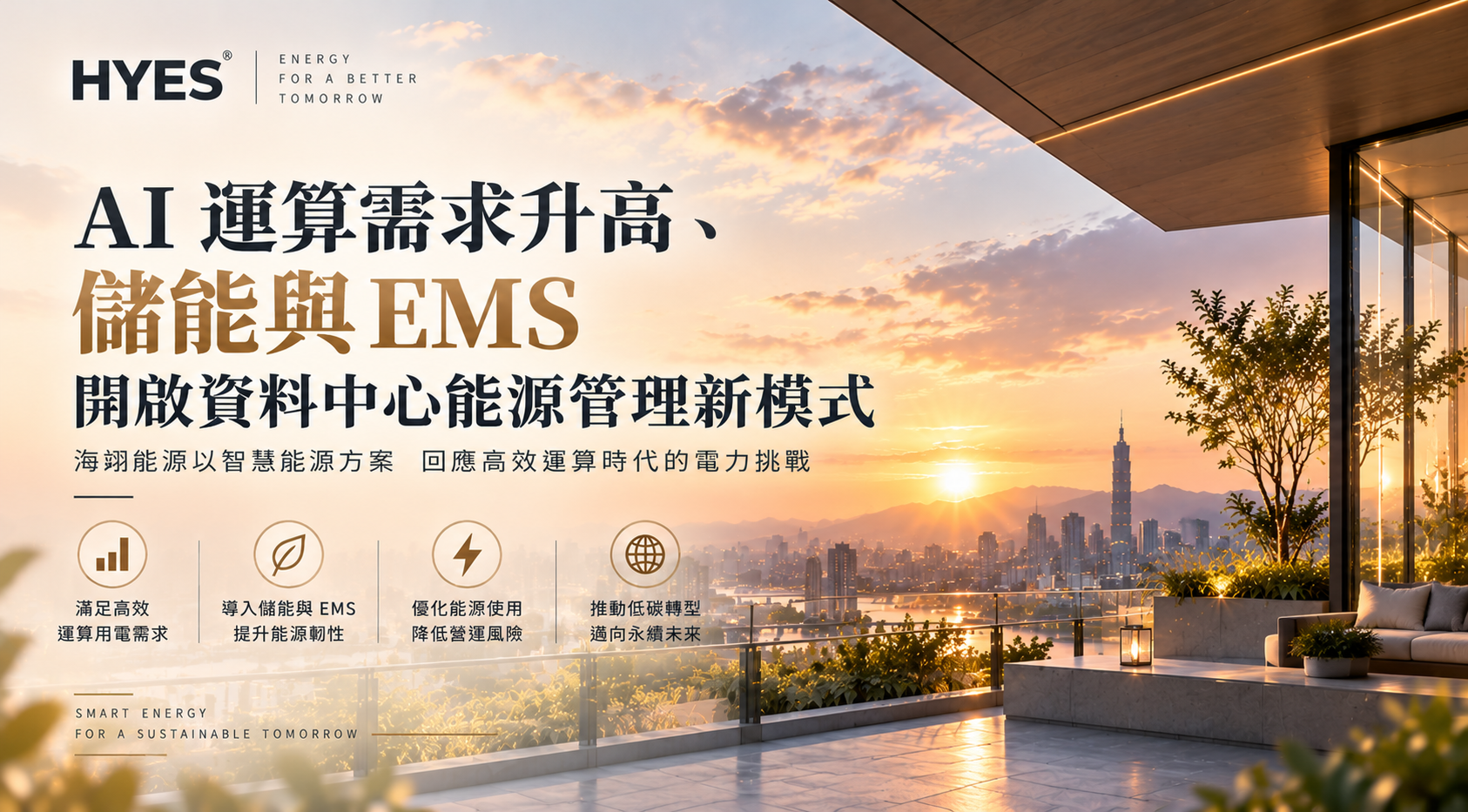
HYES Chairman KAI-YI CHANG: Rising AI Computing Demand Drives a New Era of Data Center Energy Management with Energy Storage and EMS
Date: Oct 14, 2026
Source: Economic Daily News (Reported by WU CHING-CNANG)
KAI-YI CHANG, Chairman of HYES, noted that the rapid development of artificial intelligence (AI) and high-performance computing (HPC) is driving continued growth in data center computing capacity. From large language model training and generative AI services to the adoption of various AI applications by businesses, these technologies require substantial computing resources, bringing data center energy demand into sharper focus.
As AI server computing capabilities increase, stable energy supplies are required not only for the servers themselves but also for cooling and air conditioning systems. KAI-YI CHANG emphasized that as workloads and equipment operating conditions change, data centers face challenges beyond simply ensuring sufficient power supply. They must also understand their electricity consumption patterns and use energy more efficiently.
Data center energy management can evolve beyond ensuring an uninterrupted power supply to include greater visibility into electricity consumption and more effective energy allocation. By combining real-time data with energy storage systems and energy management systems (EMS), businesses can better understand energy usage across different periods and load conditions, allowing them to adjust their management strategies according to actual needs.
In the past, energy storage in data centers was primarily used for backup power during outages to help keep critical equipment running. As energy management requirements increase, however, the role of energy storage is expanding. Under normal power supply conditions, businesses can schedule energy storage operations based on electricity demand, equipment loads, and energy strategies. Energy storage can therefore become part of everyday energy management rather than equipment used only during emergencies.
For data centers with high-density computing workloads, this approach provides greater flexibility in energy management. KAI-YI CHANG pointed out that businesses can also design different energy storage operating strategies according to their electricity consumption patterns to address energy demand during peak periods or times of high loads.
While energy storage provides a tool for adjusting energy use, EMS integrates energy information generated by different equipment. Data centers contain multiple energy-consuming systems, including servers, cooling systems, air conditioning, and energy storage equipment. By integrating relevant information through EMS, managers can monitor overall electricity consumption and equipment operating conditions. Long-term data collection also helps reveal changes in energy usage, providing a reference for future energy planning and equipment management.
KAI-YI CHANG noted that energy management is not simply about knowing how much electricity is being used. More importantly, data helps businesses understand changes in energy consumption and adjust energy allocation according to actual operating conditions. In response to changing energy demand, businesses can reassess their data center energy infrastructure from several perspectives, including power supply capacity, energy storage configuration, and energy information management.
The power supply system provides a stable foundation, energy storage increases flexibility in energy allocation, and EMS integrates electricity consumption information. Together, these elements enable businesses to monitor energy usage more effectively and make more informed energy management decisions.
Source Links: https://money.udn.com/money/story/5635/9812209